
End-of-line tester for EV chargers
Every charger leaves production with a test report.
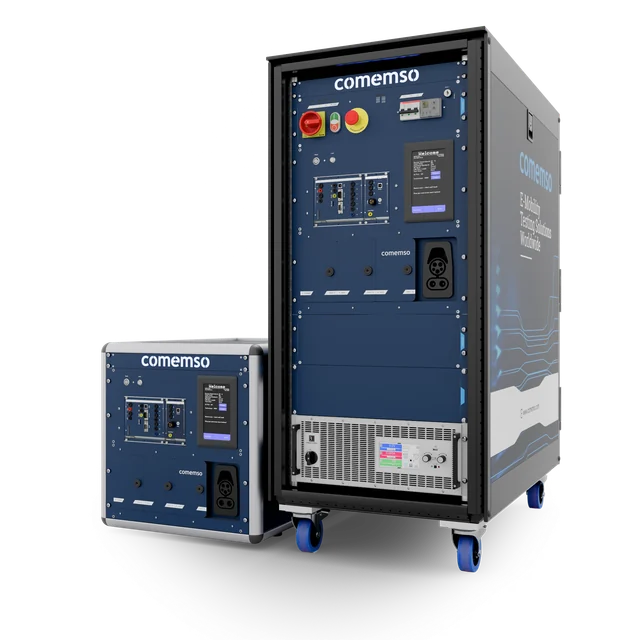
Easy Chester EOL runs the same automated end-of-line test on every AC or DC charging station before it leaves production, integrated into your production line and MES – instead of manual checks with separate instruments.1
Used in production – for legal-metrology end-of-line testing and with customer-owned power electronics.
In 30 seconds
- What for
- Charger manufacturers who must release every AC or DC unit with the same documented end-of-line test.
- What it does
- Runs one automated sequence per unit and stores one test report per serial number, linked to your MES and production control.
- Not for
- Commissioning and inspection at the installation site – that is Easy Chester Micro or Ultimate.
A defect that slips through end-of-line testing reaches the installer – and comes back as a service call.
Production test planning
Define the checks required for production release.
The EVSE End-of-Line Testing application covers acceptance criteria, cycle time, traceability and rework. The Easy Chester EOL hardware follows those requirements.
Configure Easy Chester EOL for your charging product.
The required charging connectors, test functions and production interfaces come together in a compact EVSE tester.
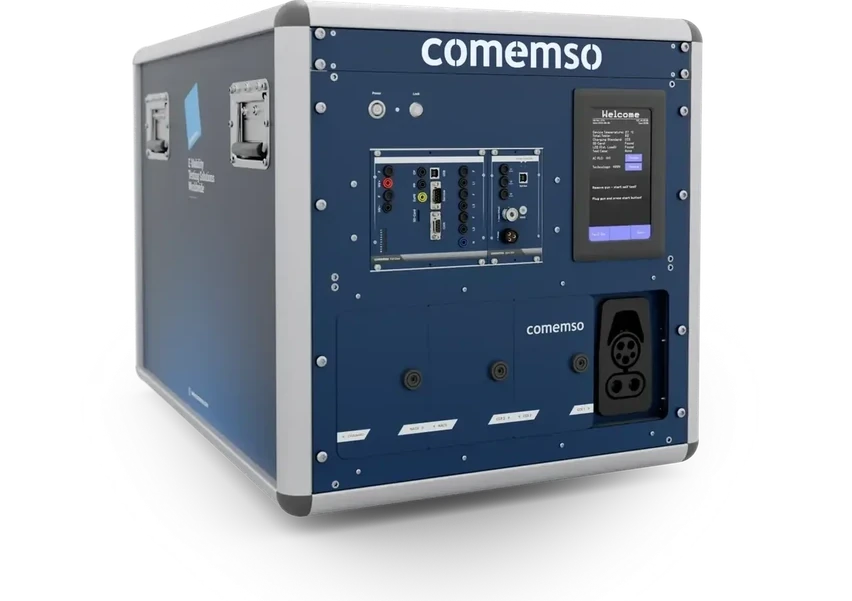
Standalone operation and factory integration.
Operators run the guided workflow on the device. Automated lines control the test through the agreed production interface.
One EOL workflow. Two power configurations.
Easy Chester EOL
Charging-interface checks, approved profiles and traceable production results.
Explore the common production cycleEasy Chester EOL HPC
The same EOL workflow for higher-power tests, with the required external power and safety equipment.
Also specify operating points, duty cycle, switching and cooling.
Explore the higher-power configurationLink each test result to the manufactured unit.
The approved test profile runs for the identified charger. Easy Chester EOL links step results, measurements and the pass/fail verdict to its serial number, variant and configuration revision. Profile selection, sequence control, reporting and data handover fit your production line.
The EVSE End-of-Line Testing application covers acceptance planning, cycle time and rework.
Extend the production test to higher power with Easy Chester EOL HPC.
EOL HPC adds the source, load, switching, protection and cooling required by the charger and production cycle to the shared charging test workflow.
Charging interface
Exercises the released connector, low-level states, communication and product parameters.
Safety controller
The system coordinates prerequisites, interlocks, switching state and cooling readiness before it enables the test under controlled conditions. We define for the project how the system shuts down and reaches its safe state.
Power hardware
Source, load or bidirectional equipment is integrated for the defined operating points and duty cycle.
Production integration
Unit identity, sequence control, verdicts and reports connect to the production line through the released RS-232 interface and SCPI commands; higher-level factory interfaces remain project-specific.
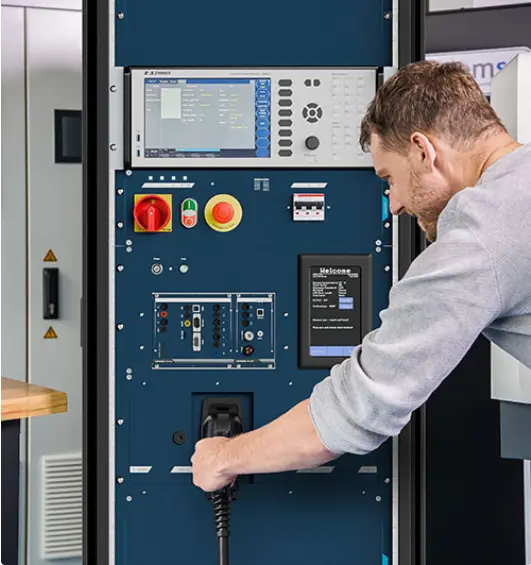
Size the test cell for your charger and production cycle.
We specify electrical, thermal, timing and facility requirements for the device under test (DUT) and production cycle separately.
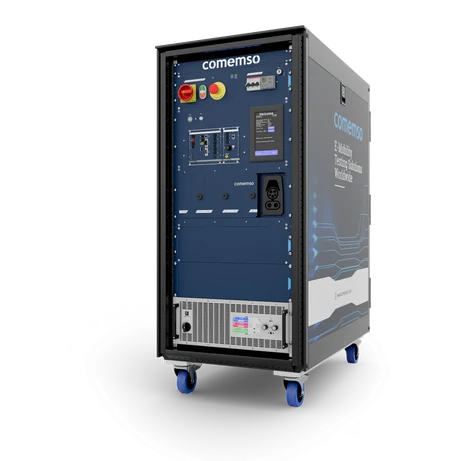
Combine production test results and calibration evidence in one record.
The Calimera GUI and a project-specific AC or DC power meter add a reference comparison before shipment to Easy Chester EOL. Functional release and metrology-oriented verification belong to the same product identity.
For EOL HPC, coordinate reference measurement with the defined high-power operating points. Measurement range, uncertainty, traceability and the released calibration procedure must be specified for the production cell.
- Reference comparison at defined production operating points
- Functional and metrology results linked to the same unit
- Meter, range, uncertainty, traceability and procedure configured for the project
Optional metrology package at end of line
- Easy Chester EOL
- production identity
- function + communication
- parameters + traceability
- Calimera GUI
- metrology-oriented workflow
- calibration
- verification
- AC / DC Power Meter
- project-specific meter
- energy / power reference
- traceable result
End-of-line calibration / legal-metrology-related verification
Configure hardware and interfaces for your test plan.
Use the production requirements checklist to define acceptance, cycle time and records. These inputs determine the EOL configuration:
Complete EVSE or defined module, connector families, charging technologies, firmware and market versions.
Required operating points, source or load equipment, duty cycle, switching, cooling and safety interfaces.
RS-232 with SCPI commands, unit identification, sequence control and result handover; MES and database integration remain project-specific.
Calimera GUI, AC/DC power meter, measurement range, uncertainty, traceability and the approved procedure for the target market.
Easy Chester EOL and EOL HPC questions
What is Easy Chester EOL?
Easy Chester EOL runs repeatable EVSE end-of-line tests in production. It performs approved function, charging communication and parameter checks, evaluates the results and links the results to the tested product identity.
What does an EVSE end-of-line test verify?
It verifies the completed charging product or a defined production module against released factory acceptance criteria before release.
Can one system handle different charger variants?
Store product and test configurations for the charger variants. Select the approved profile through the production identity or operator workflow to apply the matching test logic consistently.
How is the result linked to the manufactured unit?
The project can associate the test with approved identity fields such as serial number, variant, firmware, production order and timestamp.
Can Easy Chester EOL be integrated with production control or MES?
The production interface uses RS-232 with SCPI commands for straightforward line integration.
What is the difference between Easy Chester EOL and EOL HPC?
Easy Chester EOL is the compact production path for repeatable EVSE function, communication and parameter verification. EOL HPC adds the project-specific source, load, cooling, switching, safety and high-power test-cell integration required by DC fast-charging products.
What is Easy Chester EOL HPC?
Easy Chester EOL HPC is the Easy Chester production system for repeatable end-of-line verification of DC fast-charging and high-power EVSE products. It coordinates charging-interface tests, safety-relevant production checks, external power hardware, automation and traceable results.
What can be the device under test?
Define the DUT as the complete charger or a production module such as the charging outlet, communication controller, power stage or metering path.
Does Easy Chester EOL HPC have one universal voltage, current or power rating?
No universal combined rating should be inferred. Voltage, current, continuous and peak power, duration, energy, cooling and facility requirements are defined independently. The approved project configuration selects compatible hardware.
Can the system test the charger at defined power operating points?
Yes, when the configured production cell includes the required source, load or bidirectional power hardware. The test sequence can establish approved operating points, verify the charger response and preserve the measurements and verdicts.
How does the system support safe high-power operation?
The production cell is configured around approved prerequisites, interlocks, switching, cooling readiness, controlled enable, emergency stop, shutdown and safe-state behaviour.
Customer projects, success stories and technical articles related to this page.
- Customer projectEOL Testing with Customer Power Equipment, May 2025Easy Chester EOL connects customer power electronics through the Generic Source API for repeatable EVSE end-of-line tests. Project report, May 2025.
- Customer projectEasy Chester EOL: Metrology, June 2024Easy Chester EOL: EVSE meter data, reference checks with an ISO 17025-calibrated meter, and documented functional and safety tests in production.
- Product newscomframe 1.1: Simulation, Gateway and EOLThe July 2025 comframe release added more control over protocol simulation, bidirectional message manipulation and AC/DC end-of-line testing.
Production test planning
Configure Easy Chester EOL for your production line.
We specify charger variants, test profiles, cycle time and line interfaces per project. EOL or EOL HPC, with the traceability your production record needs.
Published project examples: May 2025: production tests with customer power electronics. The articles document the configuration used in each project at that time.
15-minute demo. An engineer shows an end-of-line test sequence with production record on a real Easy Chester EOL.Written quotation. Everything we specify together, in one quotation – then you order.Delivery and start. Commissioning and training are agreed in the quotation.