
One test system for EVSE development and production
An EVSE manufacturer tests and calibrates AC and DC charge points with one EVCA Multi Mobile system, from development to end of line.
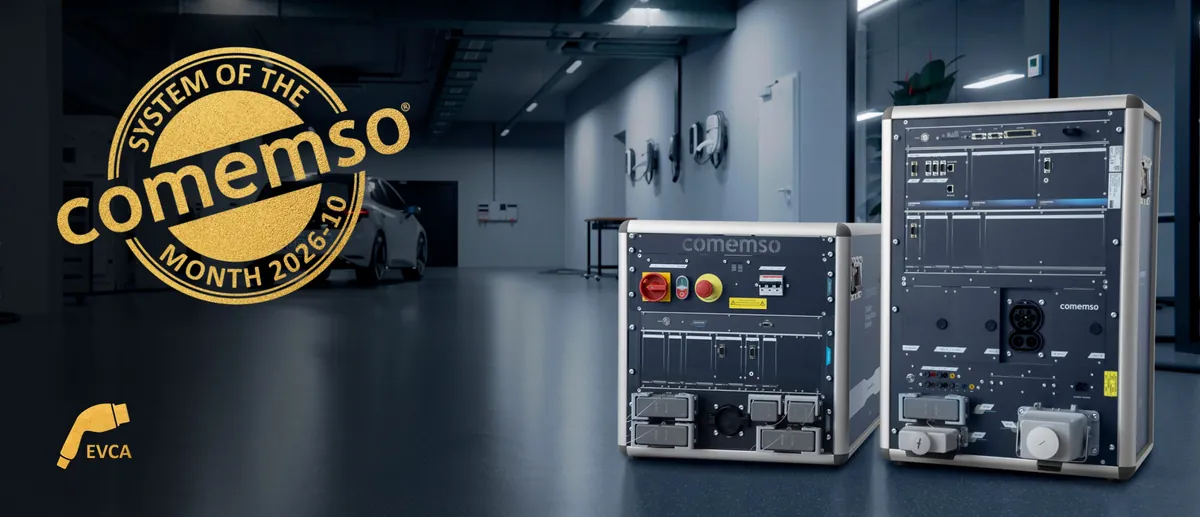
The configuration
- EVCA Multi Mobile for AC and DC as EV simulator with CCS1, CCS2 and NACS
- FI-Unit and RCD-Unit for electrical fault injection at the charge point
- AC load with 27 kW / 30 kVA and energy recovery, connected via a customised box
- comframe with a calibration add-on for EVSE end-of-line calibration
The starting point
Charge points have to work in the lab and on the production line. Between the two, test setups often differ. Our customer, an EVSE manufacturer, wanted one system for both, for AC and DC charging.
The goal
The team needed functional tests with EV simulation, defined electrical faults to check protective functions, and calibration at the end of the line. All of it should run in one setup and one software.
The system
The core is EVCA Multi Mobile for AC and DC. It works as EV simulator and supports the charging standards CCS1, CCS2 and NACS. It comes with:
- FI-Unit and RCD-Unit for electrical fault injection at the charge point
- AC load with 27 kW / 30 kVA and energy recovery
- DC inlets: CCS1, CCS2, NACS DC
- AC inlets: CCS1 (Type 1) and CCS2 (Type 2)
The external box
A customised box connects between EVCA Multi Mobile and the AC/DC load:
- Three integrated AC sensors that the customer can remove for calibration
- External energy meter
- Connection cable to the Multi Mobile
- Connector for the AC load
- Prepared for AC today, with space left for a DC load connector in a future upgrade
Software: comframe for EV simulation, conformance testing, robustness testing and calibration
The comframe user interface was customised. It works with an AC/DC energy meter for EVSE end-of-line calibration. The add-on to the comframe software framework lets users:
- Build calibration sequences
- Define test points
- Run calibration experiments
- Create and save calibration reports
Test libraries: AC TestLib for EVSE, plus ISO 15118-4 and ISO 15118-5 for CCS EVSE.
Technical data in short
- Man-in-the-middle: 1,000 V, 200 A
- EV simulation: 1,000 V, 200 A
- EVSE simulation: 1,000 V, 200 A
- AC measurement: 230 V L-N (three-phase), 32 A
The maximum values result from the weakest component in each path: inlet, connector and the measurement or simulation unit involved.
What this means for the manufacturer
Development and production use the same system and the same software. Test, fault injection and calibration happen in one setup, and results end up in one report.
Interested in a similar setup?
Talk to our engineers about your test scope and standards.